
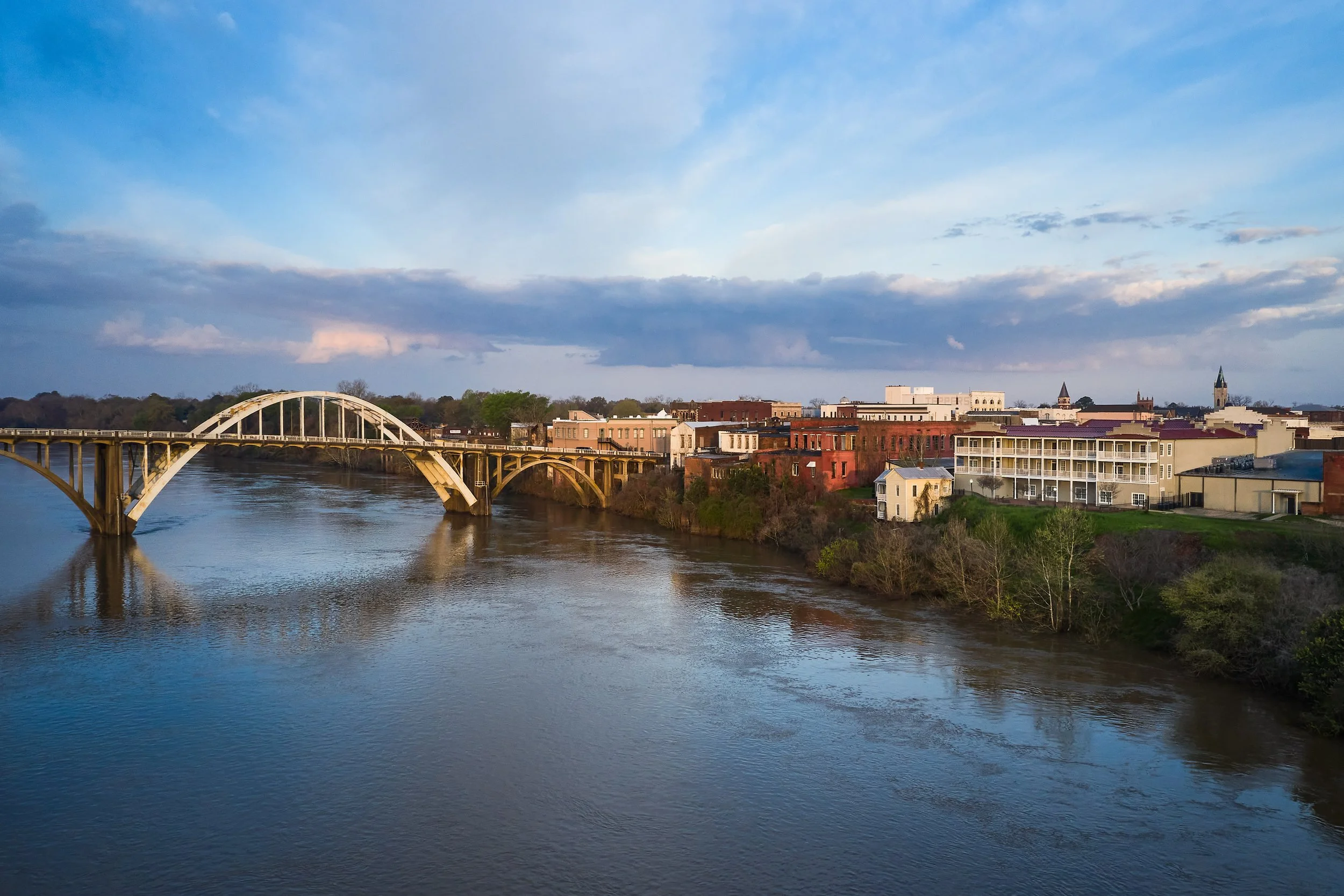
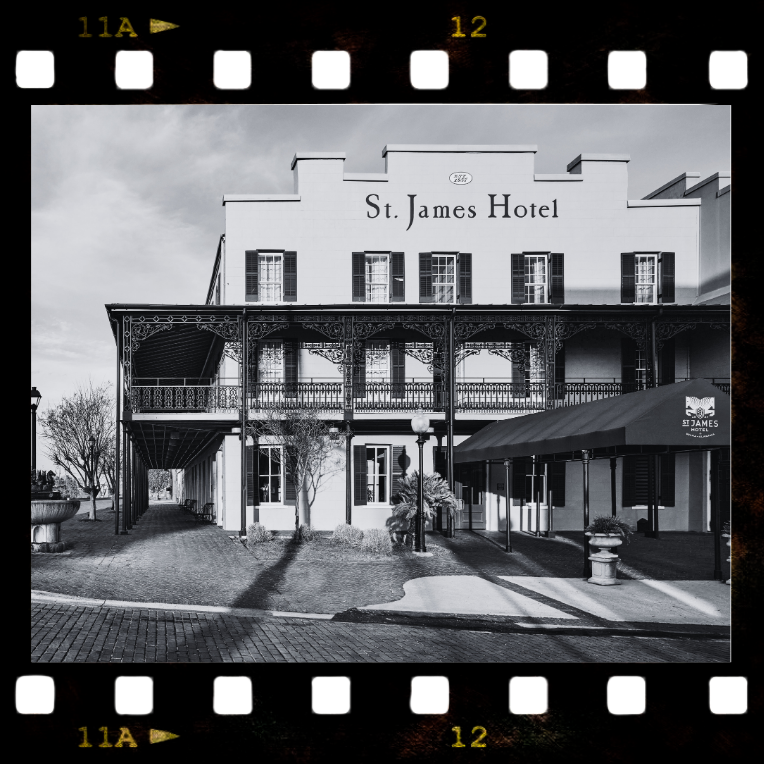
For nearly two centuries, our building has witnessed many foundational stories of our country, while having multiple lives of its own, too. A steamboat-era hotel. An outlaw's hideout. A front-row view to the courageous Civil Rights marchers. And today, this is one of the few surviving riverfront antebellum hotels in the American Southeast, reopening with the passion of the entire community behind it. The St. James Hotel has always belonged to Selma. The history here matters and always will, and so does what comes next. We want our hotel to be more than just a historical marker, but also a reason to visit, a gathering spot, and a continued source of pride for the people who live here.
Few places hold their city’s story as tightly as The St. James Hotel holds Selma’s.
Part of the town’s identity since 1837, its walls carry legends. The enslaved man who kept the hotel running during the Civil War and rose to own it. The outlaws who passed through. The marchers who made history steps from its front door. Today, The St. James Hotel is Selma's front porch, drawing curious travelers in with the city's storied past, its captivating present of art, cinema, and culture, and a future charging ahead with momentum all its own.
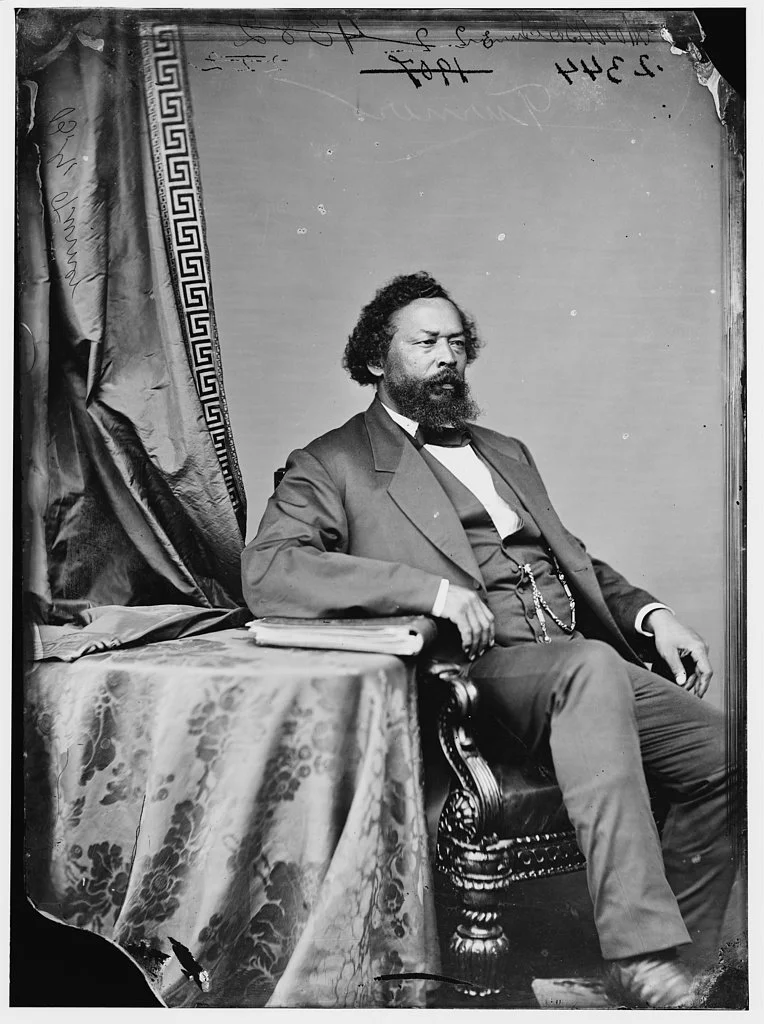
Brady-Handy photograph collection, Library of Congress, Prints and Photographs Division.
There’s a spot in downtown Selma where the Alabama River slows and widens, almost pausing to take in the view. The St. James Hotel has steadfastly stood above this spot since 1837. Its lacework balconies and Creole-influenced architecture recall the great steamboat ports of the nineteenth century, and its view, the river below, the famous Edmund Pettus Bridge just beyond, places guests at the crossroads of nearly two centuries of American history.
That history begins with the remarkable Benjamin Sterling Turner, an enslaved man whose tenacity and skill kept The St. James Hotel running through the Civil War.
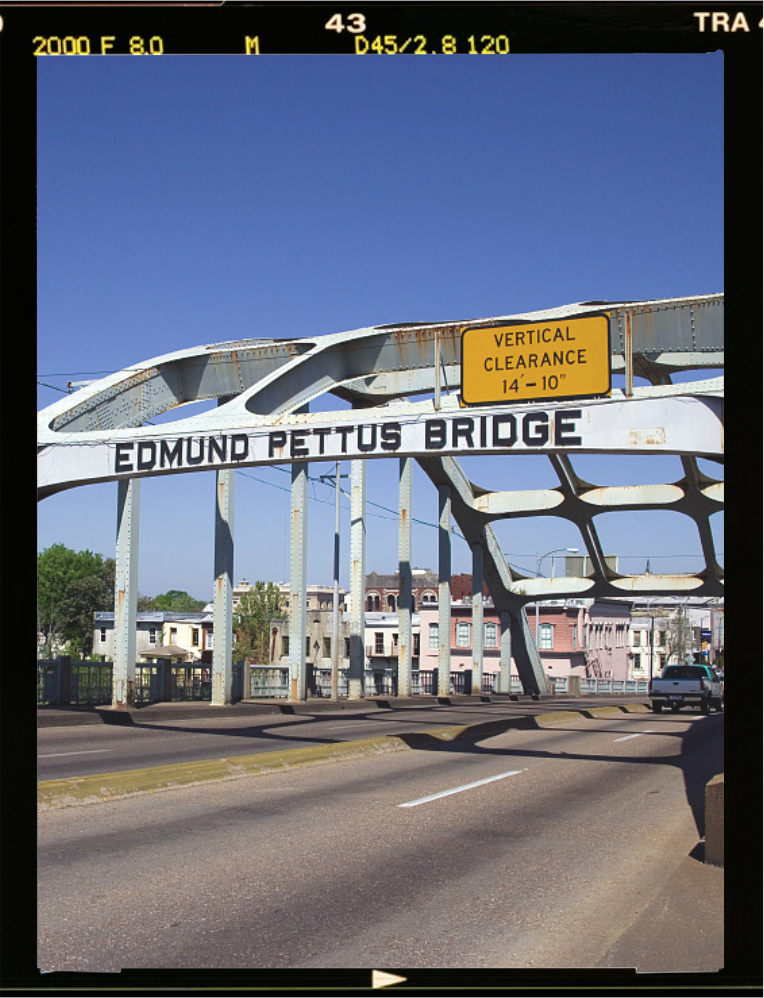
Carol M. Highsmith's America, Library of Congress, Prints and Photographs Division
With freedom in 1865 came opportunity, as Turner purchased the very hotel he once managed and, in 1872, went on to become the first African American elected to Congress in Alabama’s history. His story of self-determination and resilience still lives in every corner of the hotel, which has been thoughtfully restored to honor its antebellum architecture and riverfront grandeur, while still offering guests every modern comfort and luxury.
And this is not the only story these walls hold. In 1865, when Union forces swept into Selma and much of the city was burned, the hotel was spared, as General James H. Wilson claimed it as his headquarters. Years later, the outlaw Jesse James passed through, trading billiards shots for romance with Lucinda, a longtime resident so fond of the scent of lavender that guests always knew when she was around. Her portrait still hangs in a sitting room off the lobby, a legend in residence, welcoming a new generation of guests to the hotel she once called home.
Steps from the front door, the Edmund Pettus Bridge rises over that same bend in the river, where in 1965, history was made when marchers bravely crossed it to demand equal voting rights.
To this day, travelers from around the world come to Selma to walk in their footsteps, and The St. James Hotel, as Selma’s front porch, welcomes them in with proud and enthusiastic Southern hospitality.
Centered in many of these stories, The St. James Hotel has remained the focal point of downtown Selma, a city still writing its story through its artists, makers, and passionately devoted residents. Here, the past is honored, the present is alive, and the future is celebrated. From the steamboats and soldiers to the marchers and the dreamers and every new visitor who finds their way in, The St. James Hotel is the place where Selma’s stories continue to gather.